Perpetual futures trading is one of the most popular terms or words which every crypto related person hears about. Like if you are already in crypto or beginners and you spent some time in this industry. Then you must’ve heard these words like perpetual futures, liquidation, leverage ,long and short and so on.
Many of the traders, both new and old , find perpetual futures very difficult and scary kind of thing. And on that note, I do agree that it sounds more difficult and somewhat complicated than what it actually is.
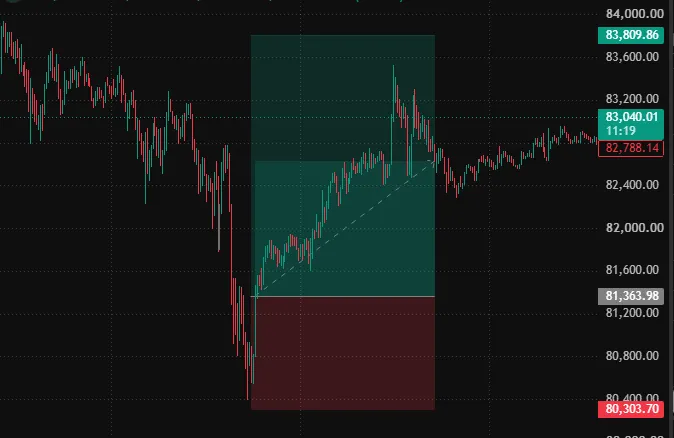
But if in short i had to explain to you then I would say this – in perpetual futures trading, the platform or your broker allows you to borrow money to amplify your position and trade bigger than your actual investment. Here you don’t need to own the actual asset itself. You trade with the price of a coin and according to your technical analysis you will go long [which is buy] or short [which is sell] with the trend. If you have longed a coin and the price goes up you are profitable. And if you short a coin and its price goes down then that’s your profit. Here you can trade with big position of a coin while having small capital.
Now, let’s talk about the elephant in the room. The small price movement which makes you profit, likewise, that same small movement can be the reason for your loss or even liquidation. Liquidation is – i name them as a financial punishment. They take all your capital as punishment if your margin is on the liquidation price. During every trade they will tell you about the liquidation price which you have to be aware of. Now why I named liquidation as a financial punishment, I’ll tell that later in the article.
Ok, so, In this article I will guide you in an easy way about this topic so that you can do perpetual future trade with in depth understanding. And with some insightful knowledge. And in crypto , your knowledge is your precious investment.
Perpetual Futures Trading in Depth
You are here doing prediction and anticipating about the future price of an asset. And based on that you are buying and selling. You are taking leverage or borrowing money from the exchanges to multiply your position . for instance if you have taken 10x leverage which means you are taking 10 times the risk from your account.
In spot trade, what happens is, you own the asset which you have bought and then you transfer it to your wallet. In perpetual futures trading, you don’t own the asset but you can still buy and sell it based on the speculation. For instance, let’s say you are doing perpetual futures trading on bitcoin which is BTC. Now if you are certain that BTC price will go up.
In that case you go for long on bitcoin. When you click long , the long trade position will open on your contract. Likewise, if you certain that BTC price will go down then you go for short on BTC. Now pay attention that I use the word “certain” instead of “think”. In crypto trading, especially perpetual futures trading, you should not trade based on what you think will happen. Instead you have to have the skillset and knowledge to find yourself in a position of certainly. Guess will and has always led to blown up accounts of many new traders.
Now let me explain why I said earlier that liquidation is financial punishment. You are trading usually on broker accounts or exchanges. That leverage button right there, they are allowing you to borrow money from their platform for you. And now if you open a long trade with 10X leverage and the price goes below the liquidation price. Then that exchange will take all your money you have. Based on isolated or cross margin . Its their way of saying to you that – why did you take this trade if you didn’t know that it would go against you. Why did you take that much borrowed money to trade if you are not sure of the trade profitability.
In isolated margin, they will liquidate your total trade position money. For instance you took an isolated margin 10x long and you have used your own money which we call margin, 100 USDT.
If you get liquidated , you will only lose 100 USDT. If your account has 1000 USDT then your balance is safe there.
In Cross margin, they will use your total account balance in trade and in this case you will get liquidation price is way more longer that isolated margin. But, if you get liquidated on cross margin, they will take everything you have on your account. For instance you have taken trade for 10x leverage and your total margin was 100 USDT. And you have 1000 USDT in your total balance. Hey will take your full account money as financial punishment if you lose that trade or price goes to liquidation price.
Now, lets say you have opened a trade and forgot. How long this trade will stay open and valid. It usually if your price doesn’t touch at your stop loss or liquidation level then it can stay for a long long period of time. Certain exchanges might give you notice to close the trade after 6 months if you are in loss in that trade. But apart from that, usually they don’t expire in a short time.
Keep in mind about the fees. Trading both in spot and perpetual or short form perps, is not free at all. In perpetual futures trading they will take a trade fee instant, whether you do market in or limit entry to the trade. And then comes the funding fee. Sometimes exchanges take the funding fee 4 times a day. As long as you are trading they will be taking a fee after a certain period of time.
Let’s Talk More About Funding Rate
In perpetual futures trading, the funding rate is an important element. You need to have more in depth understanding about funding rate before taking any trade in the future.
So when you take a trade ,either long or short side in perpetual futures trading,the platform or your broker will take certain amount of fees from time to time. The reason they do it is, to maintain your position or price aligned with the spot market.
In the trading window of any exchange or platform you will see information like funding rate.
If the funding rate is positive, then it will indicate that long trade holders are paying to the short traders.
And if the funding rate is negative then, it means the short sellers are paying long.
The key or accuracy of that management fully depends on various exchanges and their platform. Some exchanges offers low fee some high fee or even some offers exceptions of fee for certain promotion.
Let me now give you a general example of how it works. Let’s say, you are holding a $1000 position in your perpetual futures trading and they are showing funding rate of 0.01%. Therefore your total money they will take as feet is = $1000 × 0.01% = $0.1
And as i said earlier, if you hold this trade overnight or long time, they might cut the fee multiple times a day based on each exchange and their mechanism. So that $0.1 might seem small, but if you are holding a $10,000 or more bigger position and for a longer term , they will be deducting that fee from time to time as long as you hold that position. And that is the reason behind a lot of traders complaining about their profit margin. You might see the profit is 11-15% but the fee has been taken 12% from that 11-15%, you won’t be able to understand what’s going on without understanding. And that is why keeping eyes on funding rate is important.
A Simple Perpetual Futures Trade Example
Let me give you all a real example of an imaginary trade which will depict the real scenario. Lets say BTC is trading at: $100,000. And on your account you have $200 margin. And then you open the trade for 5X leverage long. Which means you are buying and risking 5 times the margin you have. Then your total position size will be overall $1000 around right? Ok . Now lets say your position got profit and bitcoin price increased 2% from your entry price, now what?
Now your position’s total PnL would look like something around::
$1,000 × 2% = $20
Which means with 2% moves and 5x leverage you are now on profit of $20.
Likewise, if Bitcoin price falls and goes below 2% from your entry, your PnL will show a loss of $20, which is negative and red. That is what leverage does, it decide small movement of the price action in big profit than normal price movement.
Common Perpetual Futures Trading Mistakes
Let’s discuss some common mistakes in perpetual futures trading. These mistakes seem harmless and small but they eventually become the underlying reason for blown up accounts or profitable accounts.
First mistake is- Using too much leverage.
The greed takes over for a new trader and they think the more they take leverage the faster they can become rich overnight. But this attitude punishes them with brutal loss and losing their account balance. Some exchanges even beautify this by giving options of 200-300x leverage. So be wise and start with small leverage at the beginning stage of your journey and it will help you to maintain discipline and become a profitable trader in the long term.
Second Mistake: Moving your stop loss.
Many new traders move their stop loss after they get into a perpetual futures trading position. Before entry you need to have a clear idea about your invalidation zone of your trades. What I mean is that your trade and its technical analysis won’t work at that point. You have to accept the loss with it. But some traders, especially new ones, drag that invalidation and move their stop loss and suffer for it. Because they didn’t even have an idea of invalidation for their trade position. Then it becomes a bad habit to move stop loss over and over.
So instead of taking small losses and saving their portfolio,they drag the stop loss and sacrifice their entire account by being liquidated by the market.
Remember , a losing trade is not the end of the story. If your account survives, there will always be a chance to recover it and be profitable.
Thirdly, Ignoring the funding rate:
As I said earlier and explained, how the funding rate can impact on the profitable trade for a new trader. And also in this case, many beginning traders forget about the funding rate and they jump on the trade without even noticing it. Additionally funding rate can also indicate to you about the coins direction and confluences also sometimes. So, keeping eyes on funding rate is a must for new traders.
Fourthly, Trading Every Market Move:
Many new traders jump in on trade without even giving a thought on technicals and trend direction. They trade on every move by the market. They need to have the knowledge and sense that. Not every move on the market is worth chasing.
Fifth, Revenge trading:
Many new traders when they lost a trade, or they got stopped out by stop loss. They jump on immediately, on revenge trade, hoping to take back the money they have just lost in the market in the next trade. Eventually that becomes a trap for them and they lose more money. It is important to understand that revenge trade is never a solution and a good idea.
Few Things to Keep in Mind Before Opening a Trade
Before taking any position in perpetual futures trading. Before even clicking any long or short button. There are a few basic things to consider.
Is my setup correct or not? If you can’t understand the reason behind you taking that trade, or you don’t understand what you are doing. Then don’t open that trade. Maybe you are gambling or chasing something that doesn’t exist.
Then you need to be able to find out your mistakes in the trade setup. Identify your invalidation point of that trade before you take trade.
How much you are risking from your portfolio and what your position size also matters. It is recommended not to take more than 1-3% from your portfolio in each trade. Then you will be able to stay longer in this business even if you keep making mistakes. And then eventually that discipline will reward you with profits.
Check the liquidation and your stop loss levels before taking trade. Every exchange has the default setup and they show your liquidation level before clicking long or short in their interface.
You also need to have- what I call disaster management skills. Which means if that trade and setup goes against you then what would you do. How would you react or your action plan will be.
Final Thoughts
Every beginner can start perpetual futures trading. And most importantly every beginner can be profitable in this business. What is required is the urge to learn and patience. And having proper knowledge and skillset to be profitable. And if you have gone through this entire article and act on that and kept practicing on your demo account. Then you will be able to enjoy the journey instead of being stressed out and feeling lost. If you want more direct, one-on-one guidance on Trading perpetual futures and become profitable, book a session with Leah.
FAQs
Regular futures contracts have a fixed expiration date and require rolling into a new contract to maintain a position, while perpetual futures never expire and instead use a funding rate mechanism to keep their price tethered to the underlying spot price.
On most modern cryptocurrency exchanges, no — your maximum loss is capped at your initial margin, since the position is automatically liquidated once losses consume that margin, preventing a negative balance in most cases.
Much lower than what’s available — 2x to 5x is a far more realistic starting range for beginners than the 20x, 50x, or higher leverage many exchanges offer, since lower leverage leaves meaningfully more room for normal price volatility before liquidation.
Generally not as a starting point. Building a solid foundation in spot trading and risk management first, before adding leverage and liquidation risk into the mix, significantly reduces the odds of an early, avoidable account blowup.