Crypto Stop Loss Strategy: How to Protect Every Trade
A crypto stop loss strategy only works if you actually use it. That sounds obvious, but it’s the reason most traders lose money, not bad entries. They get in fine, then move their stop, remove it, or freeze when the trade turns against them. Here’s how Leah sets and holds a stop loss on every single trade, no exceptions.
This is not financial advice. Always do your own research (DYOR) and understand the risk of any trade before you take it.
Why Most Crypto Traders Skip Their Stop Loss (And Blow Up Their Account)
Nobody sets out to lose money. What actually happens is a trader enters without deciding an exit first, the price moves against them, and now they’re making the decision emotionally instead of with a plan. That’s when stops get moved further away “to give it room,” which almost always turns a small loss into a big one.
A stop loss isn’t a sign you don’t believe in the trade. It’s the thing that keeps one bad trade from wiping out ten good ones.
How to Set a Crypto Stop Loss That Actually Makes Sense
Using Support and Resistance to Place Your Stop
The stop shouldn’t be a random percentage pulled out of thin air. Leah places stops just beyond a real support or resistance level on the chart, using TradingView to mark the level before entry. If price breaks that level with volume, the setup is invalidated and it’s time to exit, not hope.
ATR-Based Stops for Volatile Coins
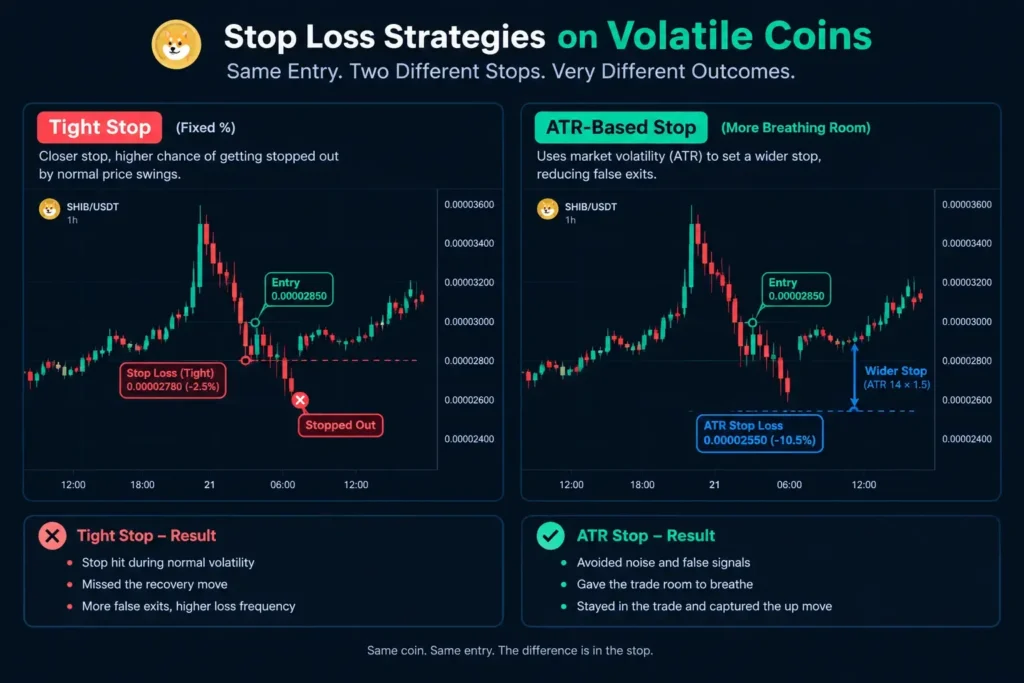
For coins with wide, choppy price swings, a fixed percentage stop can get you shaken out of a good trade too early. Using the Average True Range (ATR) indicator gives a stop distance based on how much the coin actually moves, not a guess. Wider ATR means a wider stop and a smaller position size to match, so the dollar risk stays the same.
Crypto Stop Loss Strategy for Leverage Trading
Why Leverage Changes Your Stop Loss Math
Leverage trading crypto as a beginner without adjusting your stop loss strategy is one of the fastest ways to get liquidated. Higher leverage means a smaller price move can wipe out the position, so the stop needs to sit well inside the liquidation price, with enough room that normal volatility doesn’t trigger it early. Leah reduces position size as leverage increases, she never just adds leverage on top of a stop she’d use for a spot trade.
Entry, Exit, and Stop Loss: Building a Full Trade Plan
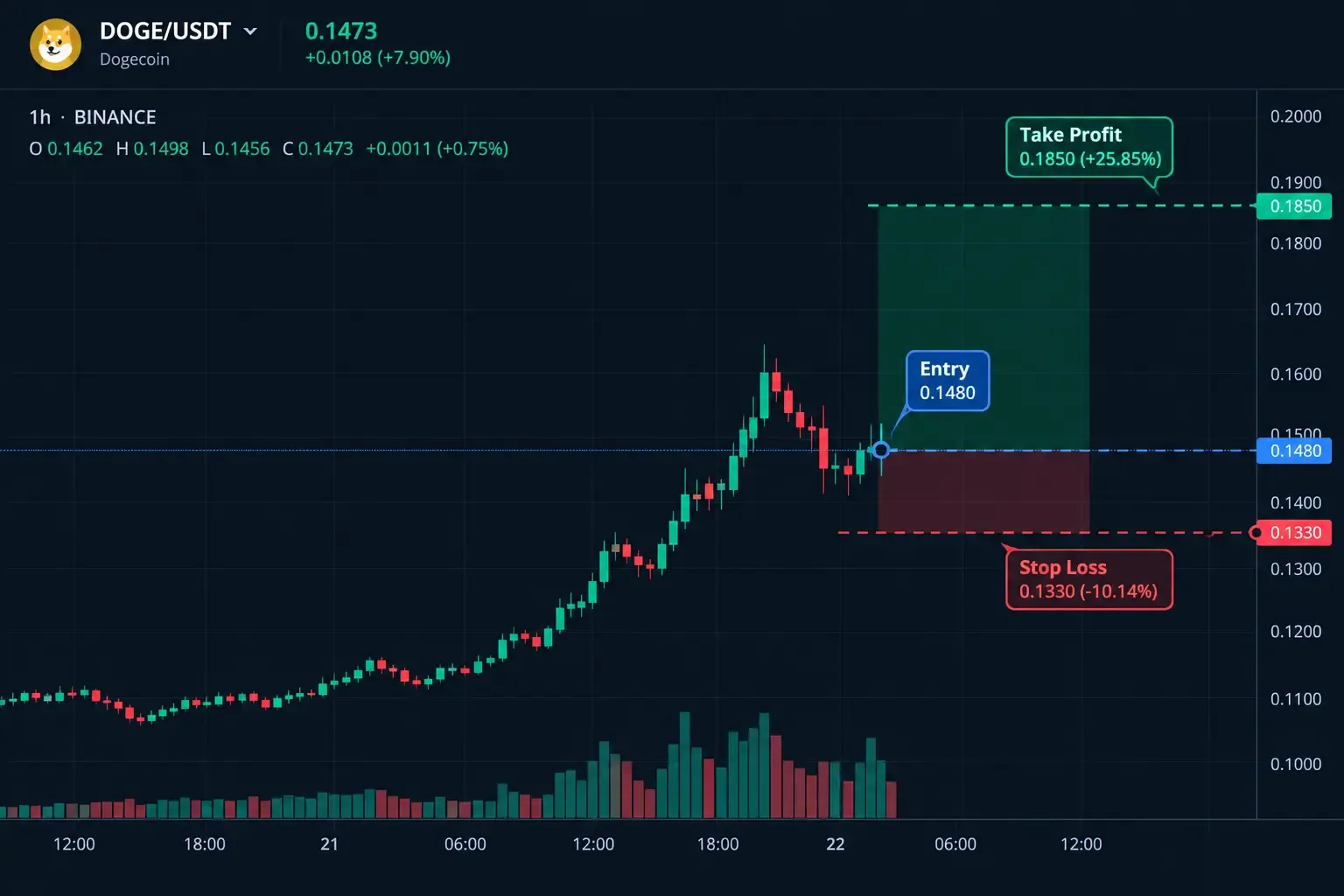
A real crypto entry exit strategy has three parts decided before you click buy: where you get in, where you take profit, and where your stop sits. If you can’t answer all three before entering, you’re not trading, you’re gambling. This applies just as much to a crypto scalping strategy on a five-minute chart as it does to a multi-day swing trade, the timeframe changes but the discipline doesn’t.
Leah’s Rules for Sticking to Your Stop Loss
- Set the stop the moment you enter the trade, not after
- Never move a stop further away once it’s set, only tighten it as the trade moves in your favor
- Size the position so a stop out is a small, forgettable loss, not a gut punch
- If you wouldn’t take the trade with the stop where it is, the trade isn’t ready yet
- Journal every stopped-out trade to see if the stop placement was actually wrong, or if it was just a normal loss
A crypto stop loss strategy isn’t complicated. What’s hard is following it on the trade where every instinct tells you to give it “just a little more room.” That’s exactly the trade where discipline matters most.
Inside Leah’s Whop community, she walks through live entries, exits, and stop placement on real trades, so you can see the process in action instead of just reading about it. If you want direct feedback on your own stop loss and risk plan, book a one-on-one session with Leah.
Crypto Stop Loss Strategy FAQs
There’s no universal percentage. A good stop is placed at a logical technical level, like beyond support or resistance, or sized using volatility (ATR) rather than a fixed number that ignores how the coin actually moves.
Yes. Every trade should have a predetermined exit before entry, regardless of how confident you are in the setup.
You can mark your intended stop level directly on the chart using the horizontal line or trade planning tools, then set the matching stop order on your exchange once you enter the trade.
Yes. With leverage, the stop needs enough room to avoid normal volatility while still sitting well clear of the liquidation price, and position size should shrink as leverage increases.